
I Think My Child Is A Spoiled Brat…
Jan 19, 2026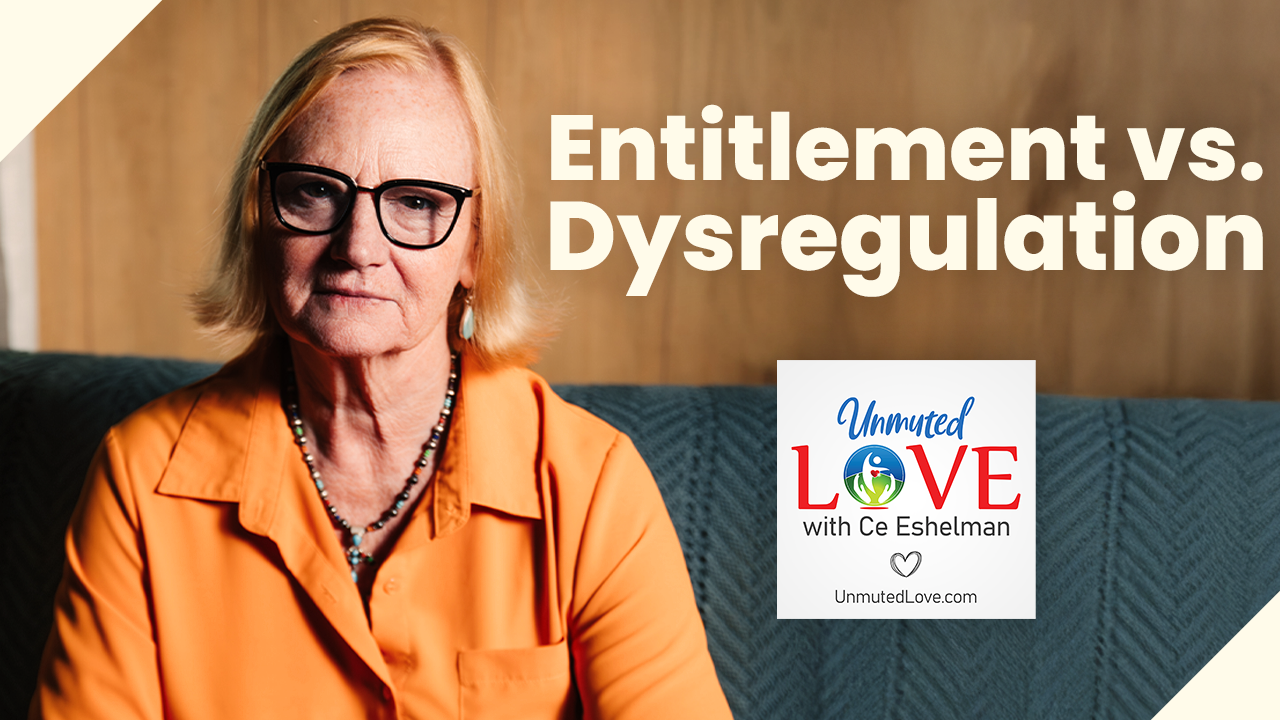
Dear Parents,
It’s okay, parents, we all have these thoughts sometimes. Like when our kids demand a bag of Takis and stomps them into a Clean-up on Aisle 4 explosion when we simply say “Not now.” Fun times.
It feels like you are raising and entitled tyrant, am I right?
If you’re parenting a child from a difficult beginning, that question lands hard, because you didn’t sign up to overindulge. You signed up to be helpful, to be healing. And yet the behavior in front of you looks outsized, oppositional, reactive, explosive and—if we’re being honest—sucky to live with.
Here’s the truth I want you to breath yourself into:
What looks like entitlement is very often nervous system dysregulation wearing entitlement’s clothes.
And if we don’t tell those two apart, we end up responding in ways that actually make things worse—for our child and for us.
That’s why the latest episode of UnMuted Love dives straight into this question.
Entitlement and dysregulation share a frustrating amount of overlap.
Both can look like:
- Big reactions to “no”
- Demands instead of requests
- Opposition to limits
- Blaming others
- Power struggles that drain the room of joy
From the outside, they’re nearly indistinguishable. But underneath? They come from very different places.
Entitlement is a learned expectation:
I should get what I want because I want it.
Dysregulation is a survival response:
If I don’t get this, I might die.
One is about belief based on experience. The other is about neurobiology based on experience.
When a child is dysregulated, their brain has jumped a gear from safe to protection. Here’s what’s happening neurologically:
- The amygdala (the brain’s alarm system) detects threat.
- The stress response floods the body with cortisol and adrenaline.
- The prefrontal cortex—the part responsible for logic, empathy, impulse control, and perspective—goes offline.
In that moment, your child literally cannot:
- Reason
- Wait
- Negotiate
- Reflect
- Accept consequences
- “Just calm down”
- Be in relationship with you
So, the behavior gets super loud super fast, and is completely self-focused. Not because your child is selfish—but because their nervous system is in survival mode. This is why lecturing, punishing, or explaining in the moment rarely helps. You’re trying to talk to the thinking brain when the thinking brain has left the building.
Listen to this week’s episode of Unmuted Love to learn why the word “no” signals danger and how to address the reaction in a safe and loving way.
One last thing: When you’re exhausted, overwhelmed, and trying to keep the peace, it’s easy to fall into patterns that unintentionally reinforce entitlement:
- Saying yes when you really mean no
- Avoiding boundaries to dodge meltdowns
- Caving in to badgering
- Rescuing instead of supporting
- Buying cooperation with rewards
- Doing for kids what they can do themselves
- Skipping contribution and gratitude
These are survival strategies of tired parents. No blame and no shame. They are reversible!
Check out the full podcast at the links below.
Your Love Matters,
 Ce
Ce
This week’s Unmuted Love podcast episode can be found at the links below:
🎧 Listen here!
📺 Watch on YouTube!
Become a VIP Parent for exclusive printables, worksheets & other resources:
http://www.patreon.com/unmutedlove
Creator of the Love+ Parenting Model found only in the Love Matters Parenting Society Therapeutic Parent Program.
📖 Get your copy of Ce's new book: 20 Things Children from Difficult Beginnings Wish Friends and Family Knew
📖 Get your copy of Drowning with My Hair On Fire: Insanity Relief for Adoptive Parents
🔍 Check out my websites: LoveMattersParenting.com and AttachPlace.com
📣 Hear the Success Stories
👉 Find Ce on Social Media:
🔹 Instagram
🔹 Facebook
Stay connected with news and updates!
Join our mailing list to receive the latest news and updates from our team.
Don't worry, your information will not be shared.